
Canopy Growth Is Closing in on Positive EBITDA. Should You Buy the Stock?
 2026-09-30 15:23
•Jeff Siegel •The Motley Fool
••• •
2026-09-30 15:23
•Jeff Siegel •The Motley Fool
••• • Axe Cap view
Canopy Growth Nears Profitability but Cash Flow Worries Persist
Canopy Growth’s improving earnings hint at a turnaround, but cash flow challenges suggest caution.
Canopy Growth’s latest quarter showed encouraging signs with revenue up 13% year-over-year and adjusted EBITDA losses shrinking. The acquisition of MTL Cannabis seems to be adding muscle across Canadian and international markets. Margins expanding from 25% to 31% signal operational improvements that any investor wants to see. Yet, the free cash flow outflow of $18.5 million highlights a lingering cash burn problem. South African investors should watch USD/ZAR closely as broader risk appetite can affect this kind of speculative play. Given the rand’s volatility, a weaker rand could either boost export revenues or fuel cost pressures if Canopy imports inputs, making timing tricky. This is a classic growth story where the path to consistent profits is still winding. If free cash flow doesn’t improve, the company's runway for growth could shrink fast. this is just our opinion and not financial advice
Wait on Canopy Growth until free cash flow stabilizes and profitability looks sustainable. Use rand strength and global risk appetite as timing signals.
- USD/ZAR
- CGC
- Continued negative free cash flow could force dilutive capital raises.
- Rand volatility could affect local investors’ appetite for riskier global growth stocks.
5/10
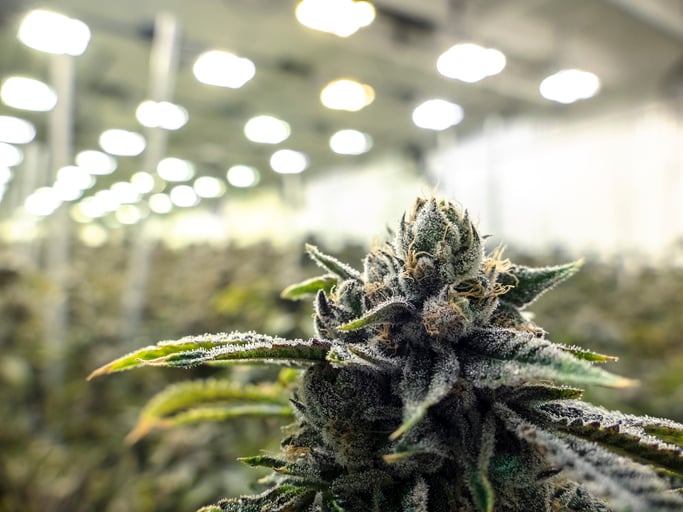
Canopy Growth is approaching positive adjusted EBITDA with Q1 fiscal 2027 revenue up 13% year-over-year to $57.4 million, narrowing adjusted EBITDA losses to $2.3 million from $5.7 million. The MTL Cannabis acquisition is driving growth across Canadian medical, adult-use, and international markets, with expected $7.2 million in annual cost savings. However, free cash flow deteriorated to a $18.5 million outflow, raising concerns about cash generation despite an encouraging balance sheet with $241.4 million in cash.
Our take is based on reporting first published by The Motley Fool.